
Science · 2025-06-10
A new path in cancer immunotherapy — neoantigen mRNA–DC vaccine plus neoantigen-reactive T cells
Runsheng Cell research describes Neo-DC vaccination combined with neoantigen-reactive T cells (NRT) to strengthen immune responses in solid tumor models.
Research overview
According to recent work described by Runsheng Cell, neoantigen dendritic cell (Neo-DC) vaccination combined with neoantigen-reactive T cells (NRT) can strengthen immune responses and therapeutic signals in solid tumor models—supporting a differentiated path for personalized cancer immunotherapy.
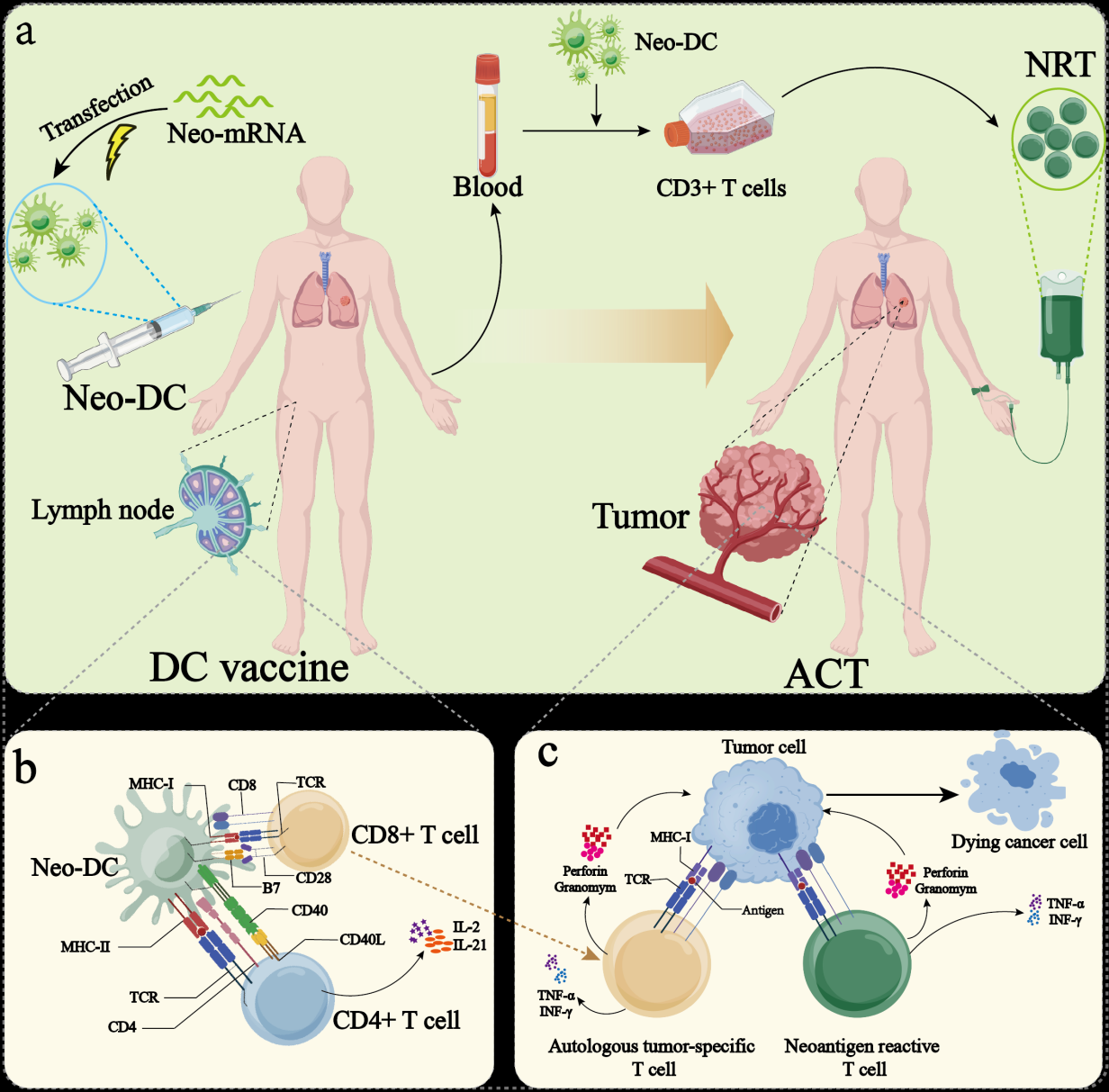
Figure legend (from source materials)
(a) Conceptual illustration of Neo-DC vaccine combined with NRT in patients.
(b) After Neo-DC vaccination, effective immune activation in lymph nodes with autologous CD4+ and CD8+ T cells.
(c) Tumor cells are recognized and attacked by tumor-specific T cells together with adoptively transferred NRT.
DC vaccines: focused immune priming
Dendritic cells are professional antigen-presenting cells that process tumor neoantigens and initiate antigen-specific T cell programs. Loading tumor neoantigens onto DCs can elicit neoantigen-specific T cell responses. Preclinical literature cited by the program suggests DC vaccines can support T cell expansion and differentiation, enhance anti-tumor activity, and contribute to durable immune memory in experimental settings.
Neoantigen-reactive T cells (NRT)
Neoantigens arise from tumor-specific mutations and can be recognized as distinct targets. DC vaccination can help expand neoantigen-specific T cells ex vivo for reinfusion as NRT, aiming to improve tumor-directed cytotoxicity when combined with priming.
Preclinical combination data (early)
Internal animal studies summarized by the team indicate Neo-DC vaccination can support NRT expansion and improve tumor infiltration in selected models; combination treatment increased intratumoral T cell infiltration and persistence versus either modality alone in those experiments.
This web article is informational; experimental results may not predict clinical outcomes. Refer to formal publications and study protocols for authoritative methods and results.